This page explains how coordinated disclosure works when the EEF CNA is involved, whether we reached out to you or you came to us with a report from a third party.
1. How You May Be Contacted
1.1 The CNA Contacts You
If we have received a vulnerability report concerning your project, we will reach out to you directly. You can expect a personal email from one of our Points of Contact, or an invitation to a GitHub Security Advisory on your repository.
Our initial message will include:
- A summary of the reported vulnerability
- The CVE ID we have reserved (or a note that we will assign one)
- A request to confirm your preferred coordination channel (GitHub Advisory or email)
- Access to follow the in-progress CVE record on this site (see §4)
1.2 You Contact the CNA
If you have received a vulnerability report from a third party and need a CVE number, please reach out to us via our Contact page. We will acknowledge your report within two business days and guide you through the rest of the process.
2. Preferred Channel: GitHub Private Vulnerability Reporting
We strongly recommend using GitHub Private Vulnerability Reporting for coordinating disclosure. It keeps all communication, patches, and timelines in one place, and makes it easy to collaborate privately.
-
Enable Private Vulnerability Reporting
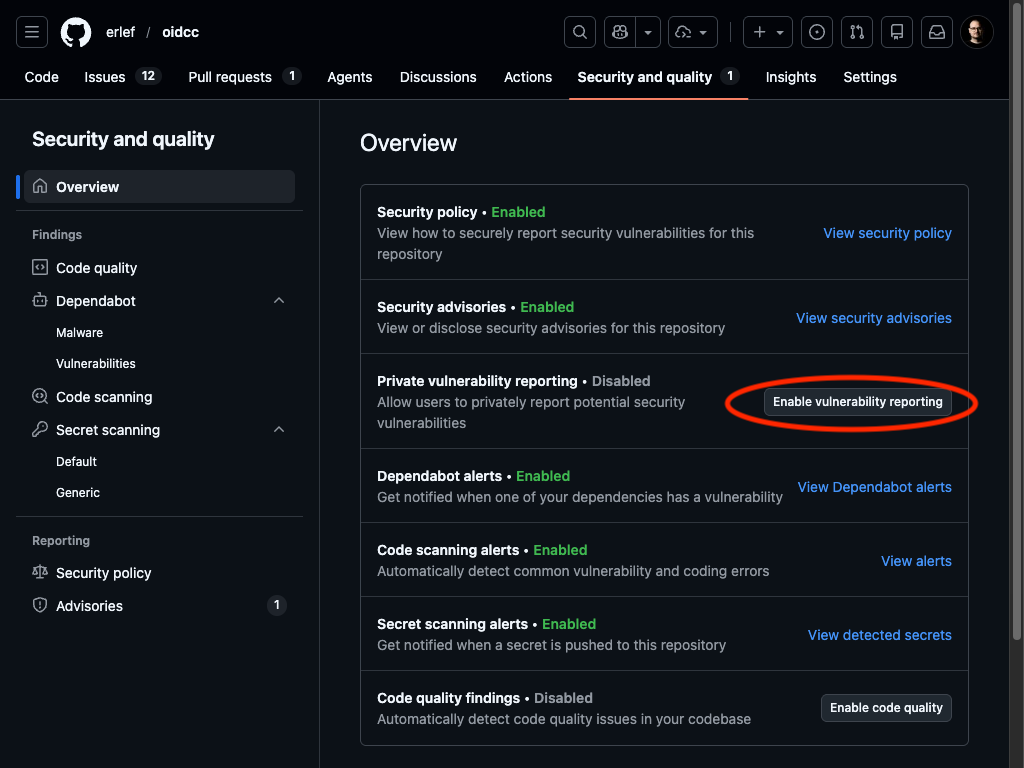
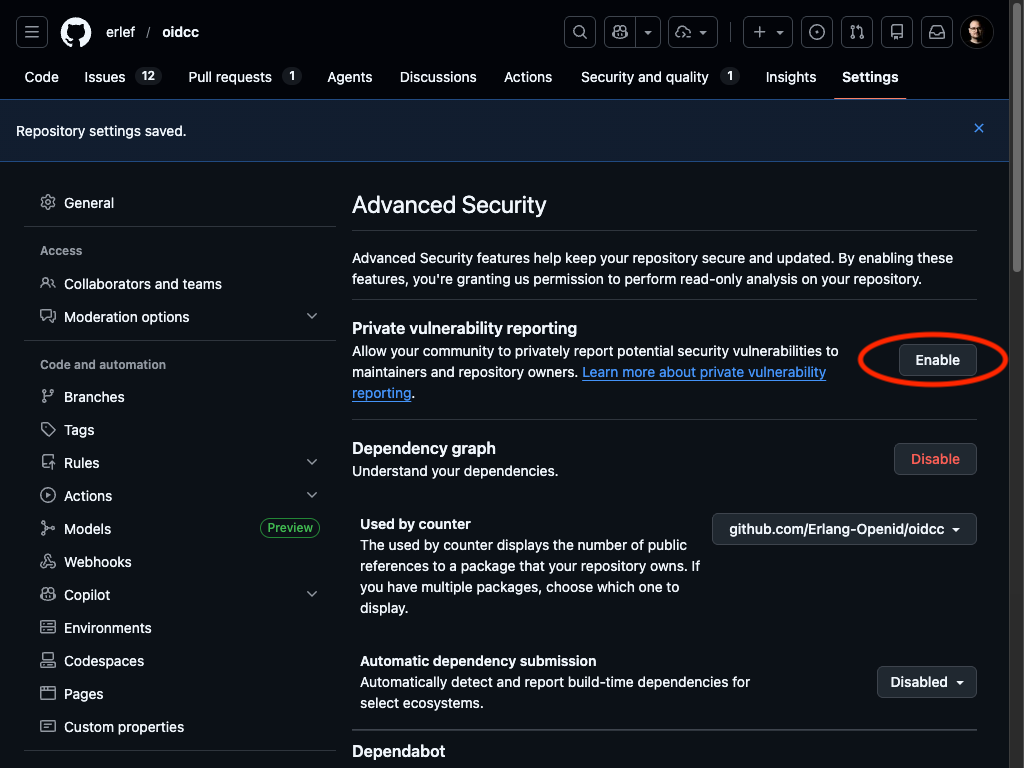
In your GitHub repository, go to the Security and Quality page and click "Enable vulnerability reporting". This will navigate you to the repository settings — click "Enable" in the Private vulnerability reporting section.
-
Invite the CNA as Collaborators
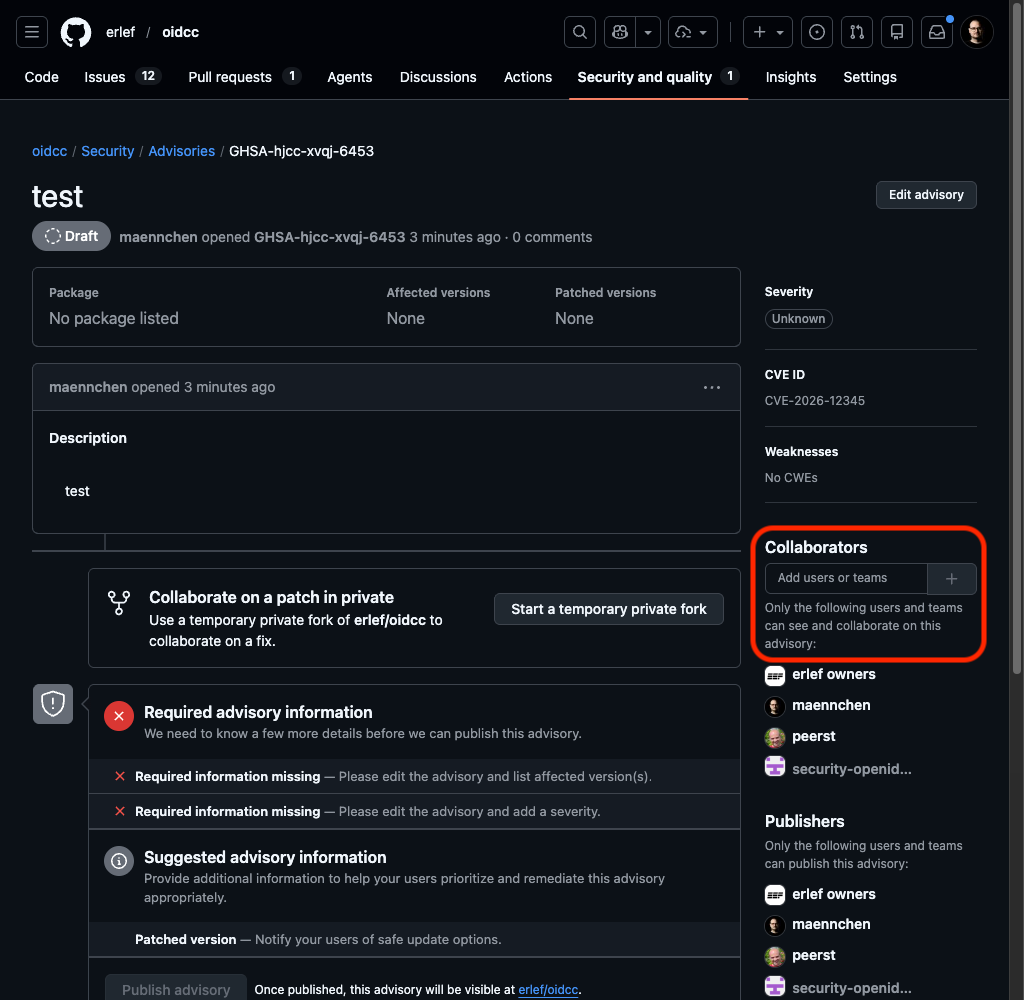
Add our Points of Contact to the private advisory so we can assist with triage, assign the CVE ID, and coordinate publication.
@IngelaAndin— Ingela Andin, OTP Core Contributor@maennchen— Jonatan Männchen, CISO, EEF@voltone— Bram Verburg, Security WG Chair
-
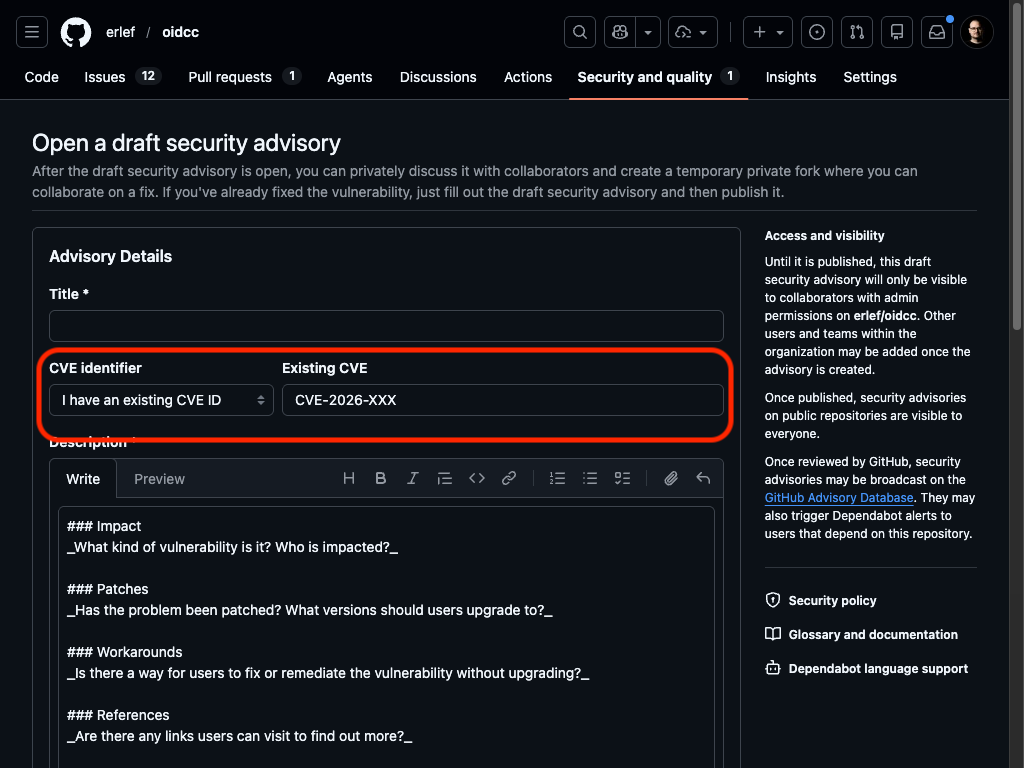
Set the CVE ID Field
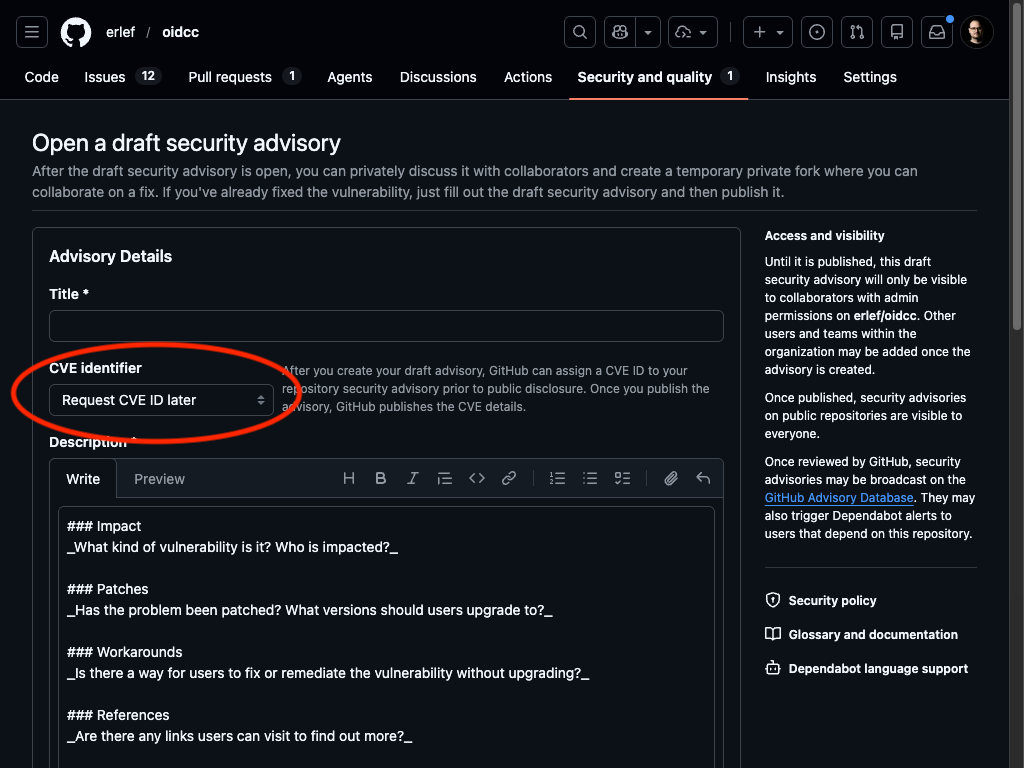
When creating the advisory, choose "Request CVE ID later". Once we provide the CVE ID, edit the advisory and select "I have an existing CVE ID".
3. Email Alternative
If your project is not hosted on GitHub, or you prefer email, you can coordinate everything through cna@erlef.org. Encrypted communication is also supported; see the Contact page for our GPG key and fingerprint.
4. Following the CVE Record on This Site
While the advisory and the patch work happen on GitHub or by email, the CVE record itself is drafted on this site, and granting you access to the in-progress case is our standard practice: we grant it to your GitHub or Hex.pm handle, and signing in with that account is all it takes. No prior registration is needed.
On the case you see the draft record exactly as it will be published: the description, severity, affected version ranges, and credits. You can comment, and you can propose corrections to any field. Maintainers usually know the affected versions and the fix timeline better than anyone, and a proposal is exactly the right way to hand us that knowledge. The CNA reviews every proposal, and what is ultimately published is the CNA's decision, per our governance policy.
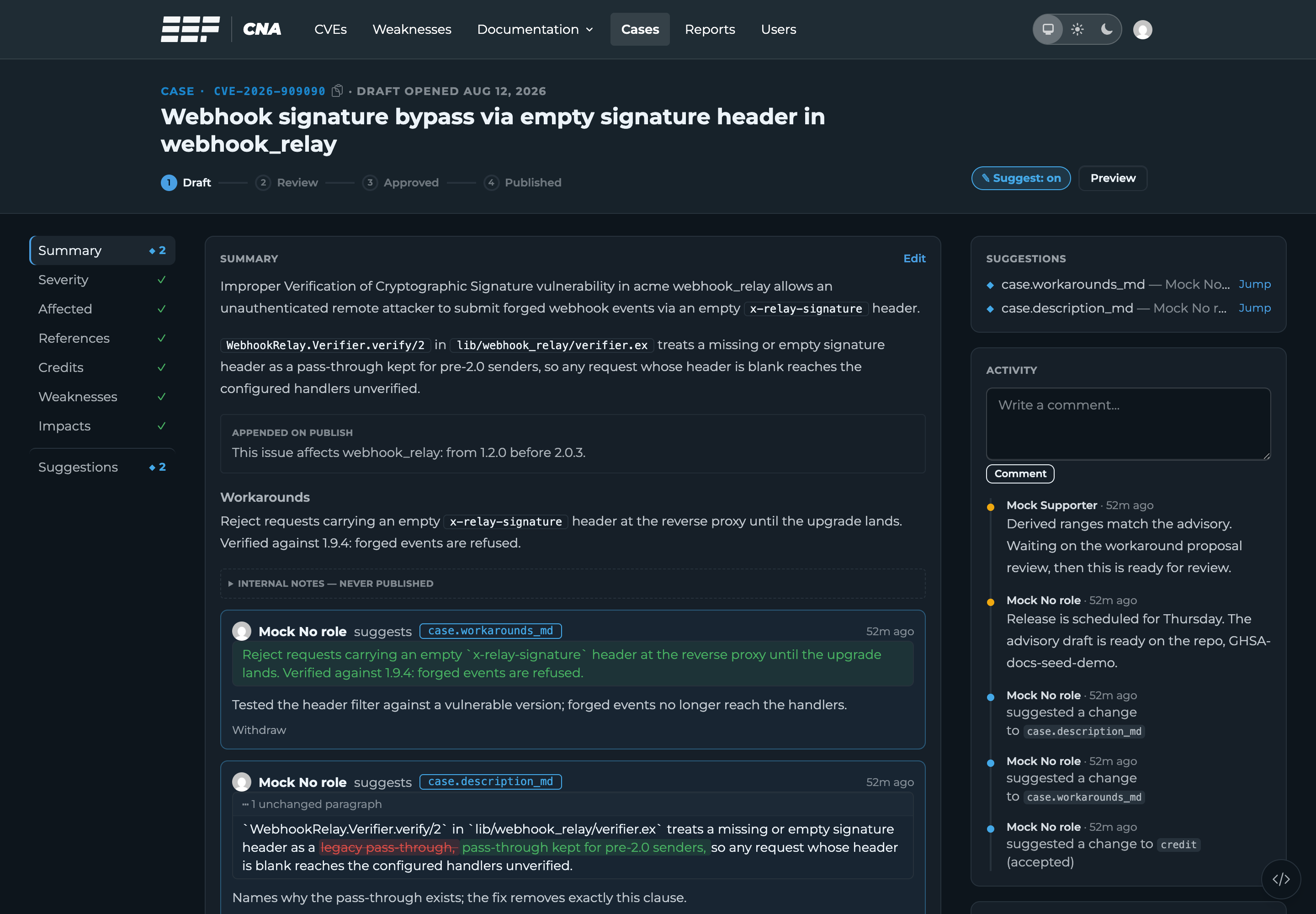
One caveat: the site sends no emails yet. Your CNA contact tells you when there is something to look at, and nobody is notified of comments, so keep anything time-sensitive on the advisory thread or email.
Everything on an unpublished case is embargoed and visible only to the people on it. The Varsel Guide has the rest of the detail.
5. The Disclosure Process
Once initial contact is established, the typical workflow is as follows:
-
Triage
Review the advisory or report. Confirm the issue is valid and assess its severity.
-
Add Reporters as Collaborators
Invite the original reporters to your private advisory. They can clarify details and verify that your patch addresses the issue.
-
Set the CVE ID
We will provide you with a CVE ID. In the advisory, go to Edit → CVE identifier → I have an existing CVE ID and enter the ID we give you. Do not request a CVE ID from GitHub.
-
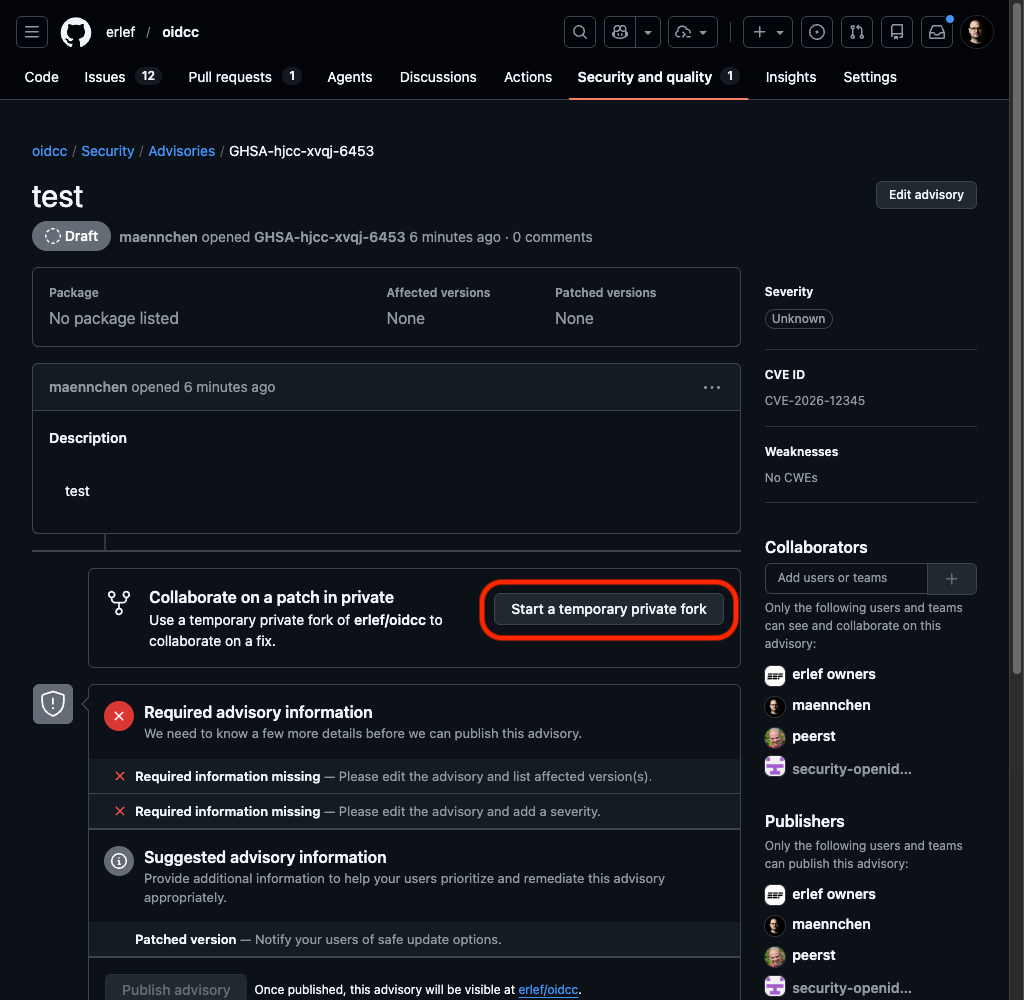
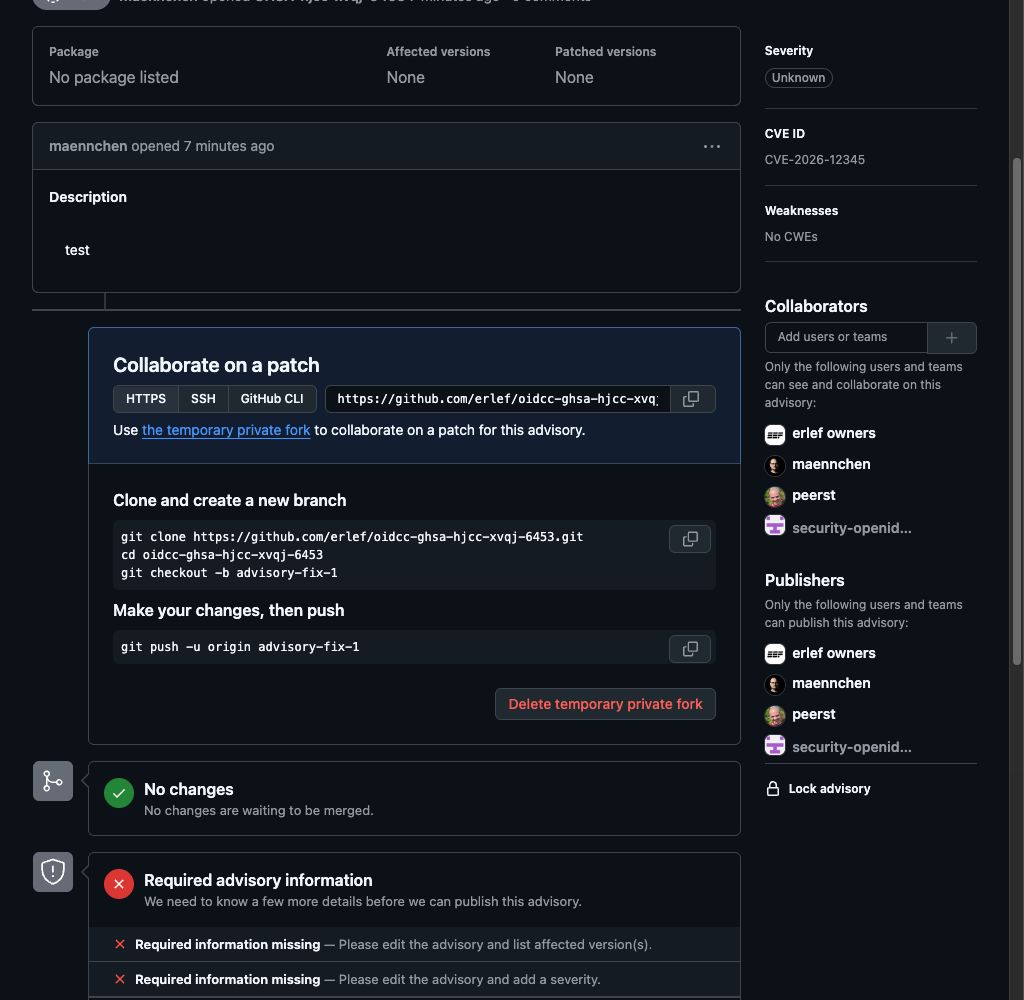
Create a Private Fork
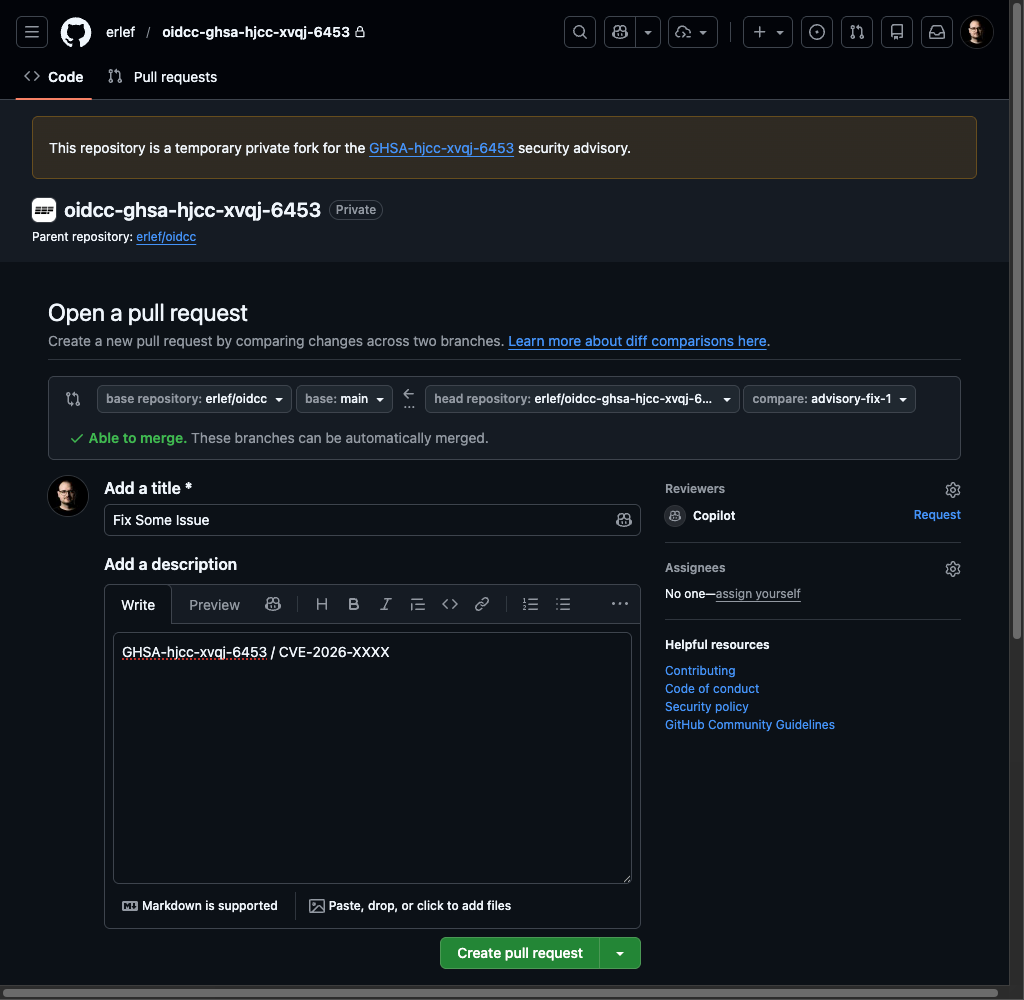
Use GitHub's "Start a temporary private fork" button on the advisory page. All patch development should happen in this private fork, not on your public repository. If you are coordinating via email, you can also send the patch as an attachment or inline diff instead.
-
Develop the Patch
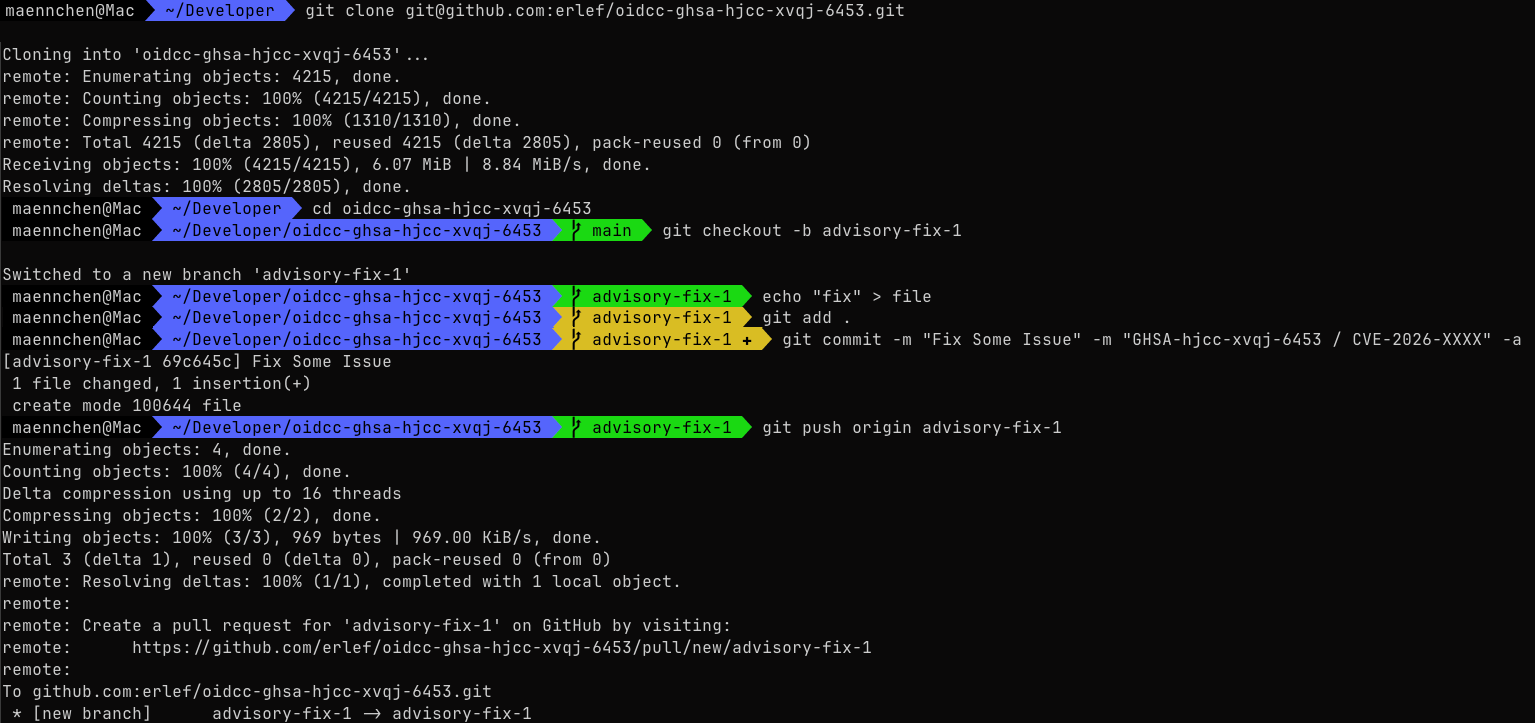
Push your fix to the private fork and open a Pull Request there. Do not push security-related changes to main or any public branch. Include the GHSA ID and CVE ID in your commit message.
-
Review & Test
Reporters test the patch and provide feedback. Iterate privately until everyone is satisfied with the fix. In parallel, the CNA will fill in the advisory details: CWE (weakness type), CVSS (severity score), credits, and the public description.
-
Coordinate Release Date
Agree on a publication date with the CNA. We appreciate a heads-up so we can be ready to publish the CVE promptly. You can use the GHSA comments to coordinate; comments remain private even after the advisory is published.
-
Merge & Release
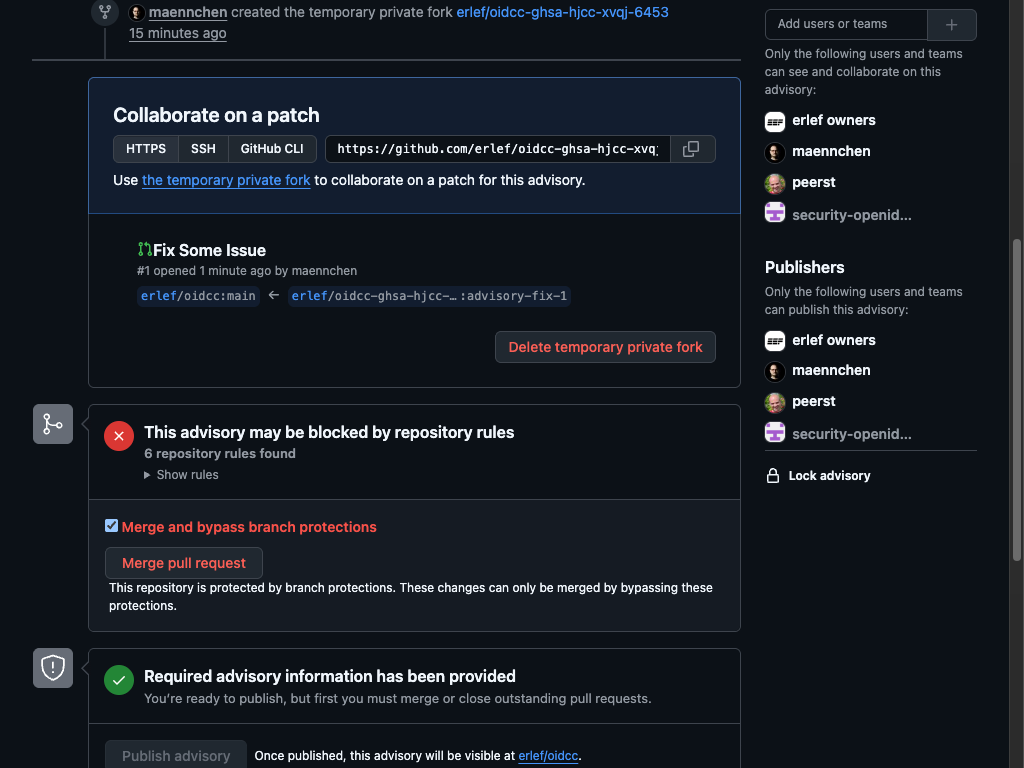
Merge the private PR, and publish a new release to Hex.pm (or your relevant registry). Do this only on the agreed date.
-
Publish the Advisory
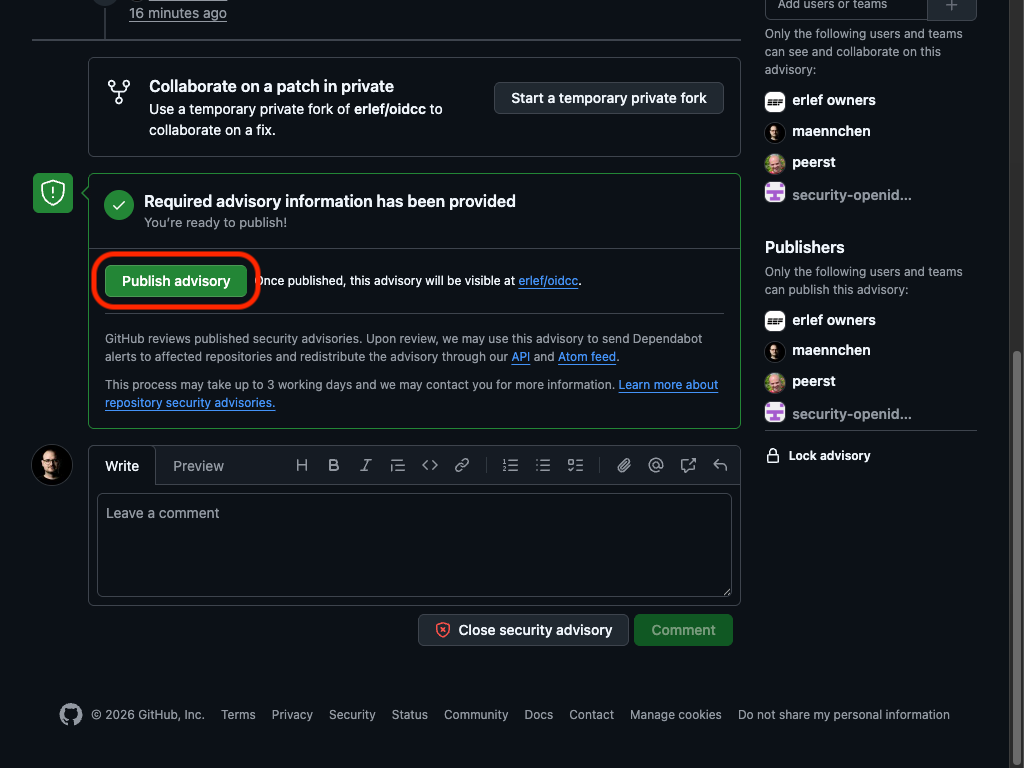
Publish the GitHub Security Advisory. This makes the vulnerability details publicly visible.
-
CNA Publishes the CVE
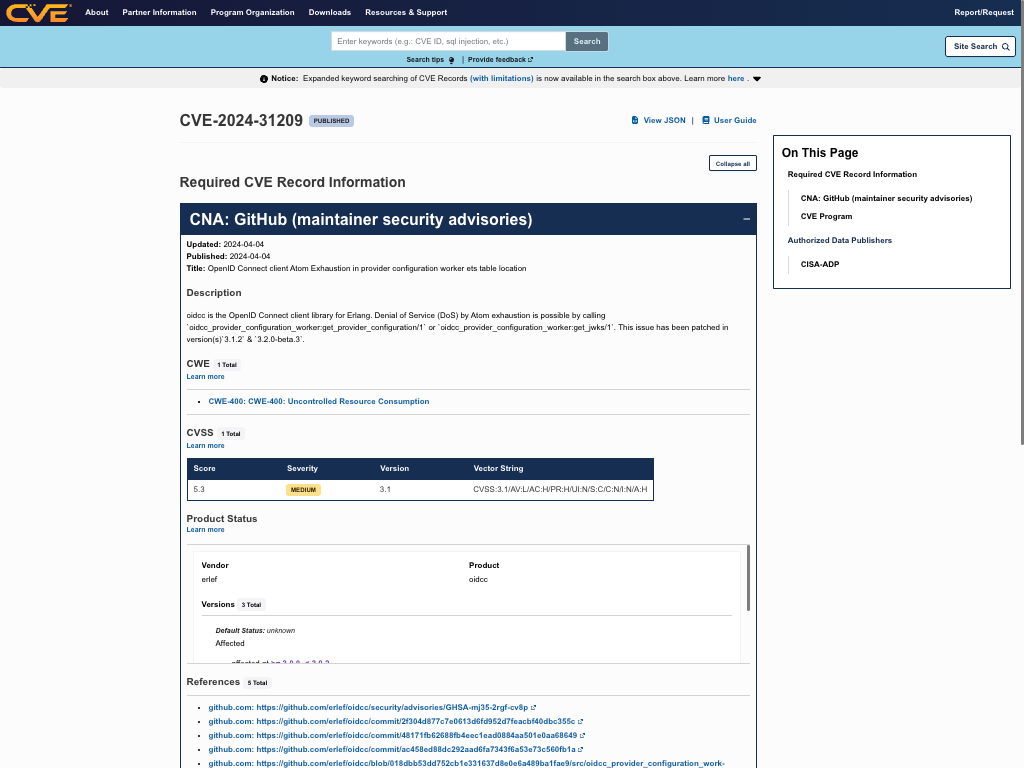
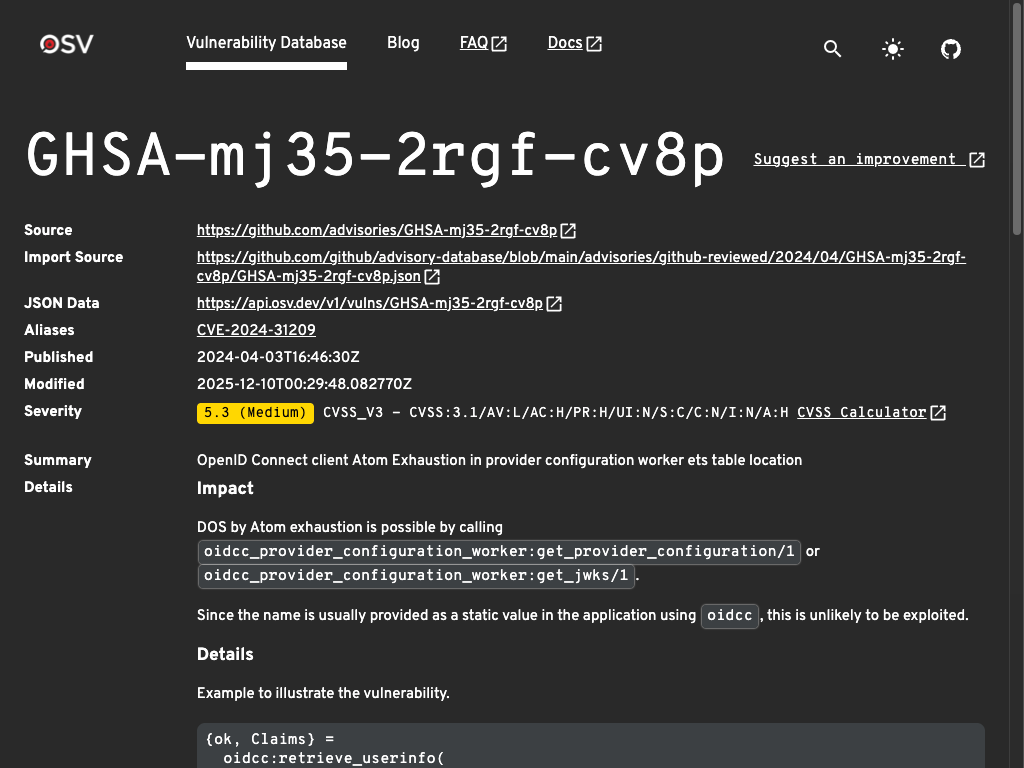
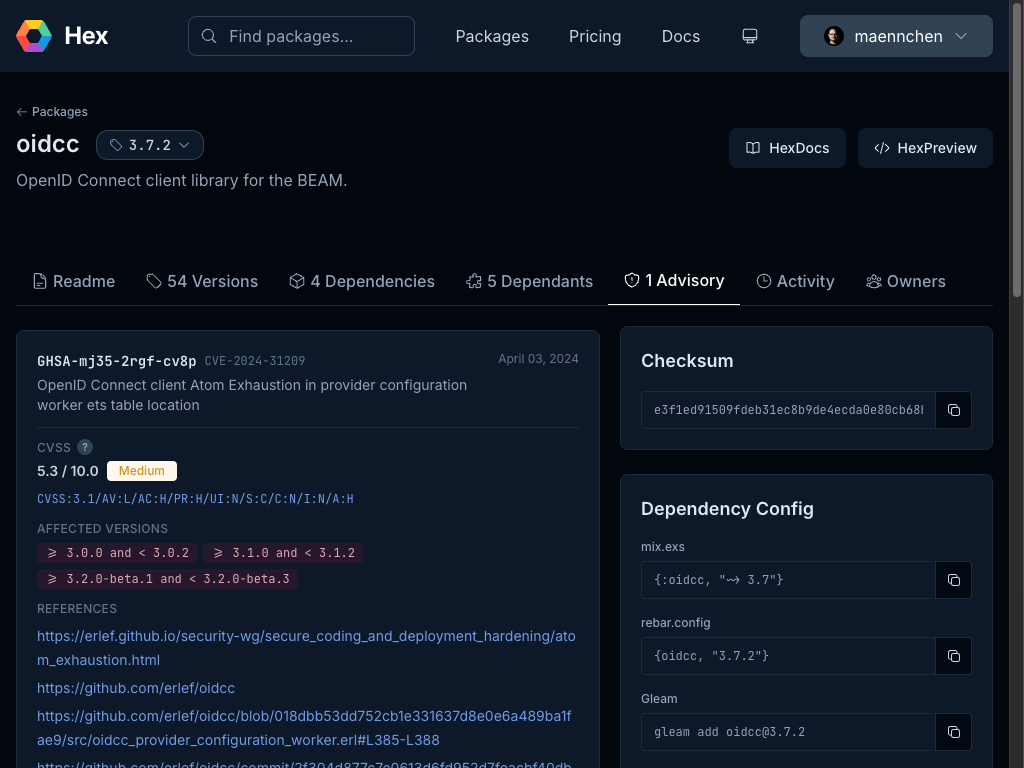
Once the advisory is published, we will publish the CVE to CVE.org, OSV.dev, and Hex.pm. In the near future,
mix deps.get,rebar3 deps get, andgleam deps downloadwill warn users when they install a package with a known vulnerability.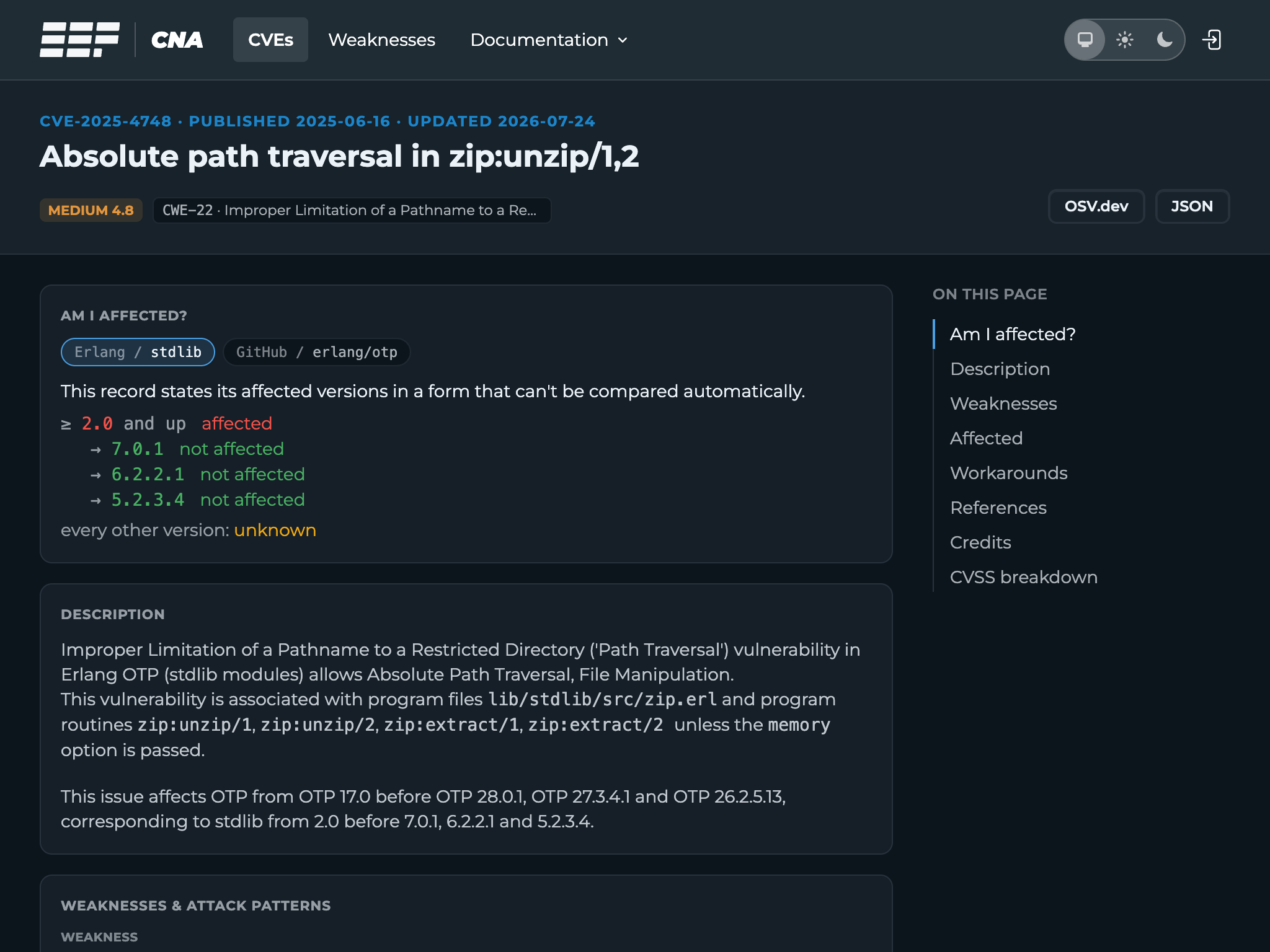
-
Public Announcement
We encourage you to inform your users about the vulnerability and the fix through your community channels such as Slack, Discord, forums, or mailing lists. If the CVE has high severity or the package has wide adoption, the CNA may also publish its own announcements.
6. Timelines & Embargo
Note: Do not make anything public before the advisory is published. This includes public Pull Requests, commits to main, public issues, blog posts, social media posts, or any other public communication referencing the vulnerability. If information becomes public, our disclosure timeline immediately shifts to 24 hours or less, regardless of whether a patch is ready.
Key timeframes:
- Maximum embargo: 3 months from the date we first contact you.
- Non-response: If we do not receive a response within 14 days, we may proceed with publishing the CVE unilaterally.
- Active exploitation: If we become aware that the vulnerability is being actively exploited in the wild, we will publish within 24 hours, regardless of patch status.
- Coordination period: We aim to be as flexible as possible, but all timelines are bounded by our Security Policy.
Please remain reachable throughout the process. We will always try to give you a heads-up before we publish.
7. What Not to Do
The following actions break the embargo and can cause the CVE to be published immediately, even if no patch is available:
- Opening a public Pull Request that references or fixes the vulnerability
- Merging a security fix to
mainor any public branch before the advisory is published - Including the CVE ID or vulnerability details in a public commit message
- Discussing the issue in a public GitHub issue or discussion
- Announcing a "security release" before the advisory is ready
- Posting about the vulnerability on social media, a blog, or a mailing list
8. Feedback
Once you are through the process, we would love to hear your feedback on this document. If anything took extra time to figure out or required clarification, we want to know so we can make it clearer for future maintainers. You can reach us via the Contact page, or send a Pull Request directly to this file on GitHub.
9. Further Resources
- Contact — Reach out to the CNA
- CVE Criteria — What qualifies for a CVE
- Varsel Guide — Following and contributing to a case on this site
- Security Policy — Full disclosure policy & timelines
- EEF Security WG Guide — Vulnerability handling best practices